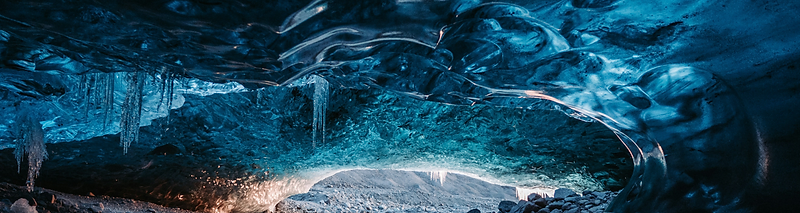
Ice Cave Tours in Iceland
Guided tours into Iceland’s glacier ice caves from Jökulsárlón, Skaftafell and Reykjavík — the season, prices and what to know before you book.
Rent your winter gear instead of buying it
Iceland Cover rents parkas, boots, crampons and camping gear in Reykjavík, with hotel delivery. Your 10% discount is applied automatically through this link.
This is an affiliate link — we earn a commission if you rent.
Guided ice cave tours
Handpicked tours departing from Jökulsárlón, Skaftafell, Vík and Reykjavík. Booking happens with Guide to Iceland through an affiliate link — prices and availability are always current there.
The Crystal Blue Ice Cave in Vatnajökull
The original Vatnajökull ice cave tour. You leave Jökulsárlón by super jeep, walk on the glacier surface, step inside a crystal-blue ice cave and see crevasses and moulins — with the guide choosing the best cave each day based on conditions.
Ice Cave and Glacier Hike from Jökulsárlón
A five-hour tour that combines an ice cave with a glacier walk: crampons on the ice, time inside the cave, and a look at the crevasses.
Katla Ice Cave and South Coast from Reykjavík
A day trip from Reykjavík by super jeep to the Katla ice cave under Mýrdalsjökull, with Seljalandsfoss, Skógafoss and Reynisfjara on the way. This cave is often open for much of the year.
2 Days: South Coast, Ice Cave and Glacier Hike
A two-day guided trip from Reykjavík: the South Coast waterfalls, Jökulsárlón, an ice cave and a glacier hike, with accommodation and an evening northern lights hunt.
2-Day Self-Drive to Jökulsárlón with Ice Caving
Two days of self-driving with an itinerary, accommodation and a pre-booked ice cave. A good fit if you want to drive yourself but let someone else handle the cave.
3 Days: Northern Lights, Golden Circle and Ice Caving
A three-day group tour from Reykjavík covering the Golden Circle, the South Coast, Jökulsárlón and ice caving, with two hotel nights and northern lights hunting.
Every ice cave tour on Guide to Iceland
The live list of ice cave tours from Jökulsárlón, Skaftafell, Vík and Reykjavík, with departure points, duration and today’s prices.
Affiliate disclosure: the links above are affiliate links. If you book, we earn a small commission from Guide to Iceland at no extra cost to you.
What are Iceland’s ice caves?
Iceland’s ice caves are not caves in the usual sense: they are chambers and tunnels carved into glacier ice by meltwater. They form each winter, shift, and disappear again. The cave you saw in a photo last year is probably not the one you will enter this year — which is exactly why you go with a guide who checks the ice daily.
Almost all of the ice caves you can actually visit are in Vatnajökull, Europe’s largest glacier, reached from Jökulsárlón or Skaftafell in the south-east. Beyond those there is the Katla ice cave under Mýrdalsjökull, a short winter season at Sólheimajökull, and the man-made ice tunnel in Langjökull which stays open all year.
Natural blue ice caves
Formed in Breiðamerkurjökull by Jökulsárlón and around Skaftafell. Dense, old glacier ice absorbs the red part of the light, so the blue you see comes from the ice itself, not from editing.
The Katla ice cave
An ice cave under Mýrdalsjökull, above the Katla volcano. It is often accessible for much of the year, which makes it the practical choice outside mid-winter.
Sólheimajökull
The closest glacier to Reykjavík (about 2.5 hours by car) and usually combined with a glacier walk. The glacier is retreating quickly, and its cave season is shorter than Vatnajökull’s.
The Langjökull ice tunnel
A tunnel carved into the glacier, open year-round. A different experience from a natural cave — useful if you are here in summer, but not the same as the blue ice.
The season: October to March
Ice caves depend on weather and ice conditions: a tour can be cancelled or moved to a different cave that same day. Reputable operators refund or rebook. If you have a tour booked, check the weather warnings and road conditions before you drive to the meeting point — winter roads can close at short notice.
Where do the tours leave from?
Jökulsárlón (Breiðamerkurjökull)
About 380 km from Reykjavík, roughly a 5-hour drive. Most Vatnajökull ice cave tours start at the lagoon car park, then continue onto the ice by super jeep.
Skaftafell (Vatnajökull National Park)
About 325 km from Reykjavík, a 4–4.5 hour drive. The departure point for tours onto Falljökull and the western edge of Vatnajökull.
Vík and Mýrdalur
About 187 km from Reykjavík, a 2.5-hour drive. Super jeeps leave from here for the Katla ice cave; many people stay in Vík the night before.
Reykjavík
Day tours and multi-day trips leave Reykjavík by bus or minibus. The Katla ice cave day trip takes about 10 hours; Vatnajökull needs two days or more.
Many travelers drive the South Coast and stay in Vík, Kirkjubæjarklaustur, Skaftafell or Höfn the night before the tour. Always check road conditions and weather warnings before setting off in winter.
What to wear and bring
Waterproof jacket and trousers
Outer protection against wind and meltwater: the glacier is wet even below freezing.
Wool layer and thermals
Air inside the cave is cold and damp; three layers beat one thick jacket.
Sturdy hiking boots
Crampons strap onto your boots, and trainers do not work. Some operators lend boots if you ask ahead.
Gloves, hat and hood
Thin gloves for operating a camera, warm ones for waiting around.
Water and a snack
Tours run 3–10 hours and there is no service on the ice.
A spare camera battery
Cold drains batteries fast, and the camera usually rides in a pocket while you walk.
Ice cave safety
Never enter a natural ice cave without a guide
Caves collapse, flood and change within hours. A licensed glacier guide assesses the ice every day.
Follow the guide’s instructions
They know where the ice holds and which tunnels are close to failing.
Stay with the group
Do not wander into side channels for a better photo; the walls there are often thin.
Keep your helmet on
Ice falls from above, especially at the entrance and inside the tunnels.
Walk in crampons the way you were shown
Walking on ice is a skill, and a fall on hard glacier ice is serious.
Check weather and road conditions
Before driving to the meeting point: weather warnings, road conditions and driving time. In winter you need a 4x4 for the South Coast, and winter tyres are the law.
How to choose a tour
Check whether the tour goes to a natural cave or a man-made ice tunnel — they are not the same experience.
Look at what is included: helmet, crampons, boots, transport onto the ice and guiding. The cheapest tour is rarely the cheapest once everything is counted.
Pick a departure point that fits your itinerary. A Jökulsárlón tour means driving or staying in the south-east; a Reykjavík tour takes the whole day.
Smaller groups mean more time inside the cave and more attention from the guide.
Check the requirements: minimum age for children, how much walking is involved, and when a tour can be cancelled for weather.
Ice cave FAQ
+When can you visit ice caves in Iceland?
Natural ice caves are accessible from October through March, usually with the best conditions from November to February. Outside that window the Katla ice cave and the Langjökull ice tunnel are often available, while the natural Vatnajökull caves are closed or unsafe.
+Do I need to book an ice cave tour in advance?
Yes. December and February sell out weeks ahead, and group sizes are small. If you have fixed dates, book as soon as they are set.
+How much does an ice cave tour cost?
A short ice cave tour from Jökulsárlón or Skaftafell typically runs about 17,000–30,000 ISK per person, and adding a glacier hike costs more. A day trip from Reykjavík (Katla) is often 40,000–55,000 ISK, and multi-day tours more. Current prices are shown by the booking partner.
+Can you visit an ice cave without a guide?
No. An ice cave is not a fixed site but ice that changes daily. Going in without a licensed guide risks your life and is not permitted.
+What should I wear to an ice cave?
Waterproof outer layers, wool or thermals underneath, sturdy boots with ankle support, gloves and a hat. The tour provides a helmet and crampons, and some lend boots. Leave cotton at home, it soaks and chills.
+Are the caves always blue?
No. The blue depends on how the cave formed, how dense the ice is and the light that day. Some years the accessible caves are intensely blue, others more white or grey.
+What happens if my tour is cancelled?
Operators cancel when weather or ice conditions are unsafe. You are normally offered another day or a refund. Read the terms ahead and keep some slack in your winter itinerary.